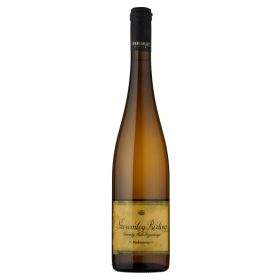
The bedrock of the Badacsony wine region is composed of volcanic basalt and basalt tuff, while its soils are a mix of slope deposits and volcanic rock debris. Its topography is defined by ancient standalone basalt hills, known as witness hills, which form the boundary between the Tapolca and Káli basins. The current vineyard area of the region is approximately 1,790 hectares. Badacsony has a sub-Mediterranean microclimate, thanks to the reflective surface of Lake Balaton and the protective southern slopes.
The leading grape varieties in the region are Olaszrizling (Welschriesling), Szürkebarát (Pinot Gris), and Rizlingszilváni (Müller-Thurgau). Additionally, Rajnai Rizling (Riesling), Tramini (Gewürztraminer), Muscat Ottonel, and Budai Zöld also enrich the vineyards and the wine selection. Of particular note is the Kéknyelű grape, which is unique to this region and regarded as a true rarity in the world of wine.
Badacsony is almost exclusively a white wine producing region. Thanks to the favorable slope angles and abundant sunshine, grapes ripen with high sugar content. Even when vinified dry, the wines tend to be full-bodied, round, and rich in alcohol. In most cases, they exhibit distinct mineral aromas and flavors. In excellent vintages, late harvests are common, often resulting in wines with significant residual sugar or even noble rot (botrytization).