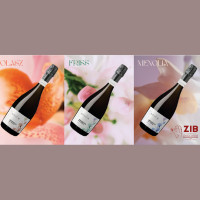
Sparkling Wine, Champagne, Prosecco
It is worth noting right at the beginning that the Hungarian word for sparkling wine, “pezsgő,” was coined by Count István Széchenyi. He was the first to refer to the French champagne as “pezsgő” in his book Credit (Hitel).
The culture of sparkling wine production began to spread in Hungary in the early 1800s when nobles who had traveled the world brought back knowledge from France and established sparkling wine factories. Numerous sparkling wine facilities were established throughout 19th-century Hungary, from Bratislava to Budafok, but the most renowned of all is the still-operating Törley Sparkling Wine Factory in Budafok.
The essence of sparkling wine lies in the bubbles, that is, the CO₂ (carbon dioxide), which is created by re-fermenting the already finished wine.
There are three main schools of sparkling wine production:
Méthode Traditionnelle: This is the oldest, most classic, most time-consuming, and most expensive method, taking several years. The key feature is that all processes take place in the same bottle—usually 0.75 liters—in which it is eventually served. The wine is re-fermented with sugar and yeast, which produces carbonation. It is then aged for several years (depending on the country and wine region), followed by disgorging (removal of the sediment), after which the final sugar content is adjusted, and the traditional bottle-fermented sparkling wine is complete.
Méthode Transvasée: This process begins the same way in 1.5-liter magnum bottles. However, before the final filtration and sugar adjustment, the wine is transferred to a large tank, then filtered and bottled from there.
Méthode Charmat: This is the world of tank sparkling wines, where every step happens in a stainless steel tank, and the finished sparkling wine is bottled from there. It is the simplest and cheapest of the three methods.
There is also a known category of semi-sparkling (gyöngyöző) and sparkling (habzó) wines. For these, CO₂ is added to the finished wine in a stainless steel tank, and depending on how much carbon dioxide the wine absorbs, the resulting pressure determines whether it becomes a semi-sparkling or sparkling wine. These typically have a pressure well below 3 bar, while regular sparkling wines range between 3-6 bar.
In terms of grape varieties, the traditional homeland of sparkling wine—France’s Champagne region—serves as a benchmark for all. The world’s best and most expensive bottle-fermented sparkling wines are produced there. The main grape varieties used are Chardonnay, Pinot Noir, and Pinot Meunier.
For other sparkling wine production methods, a much more diverse range of grape varieties is used. In addition to the aforementioned grapes, local winemakers and sparkling wine masters often experiment with native varieties.
The categories of sparkling wine based on sugar content can vary by country, but the following levels are generally accepted:
-
Brut Nature, naturherb, bruto natural, pas dosé, dosage zéro, dosaggio zero: less than 3 g/l (no sugar may be added for secondary fermentation)
-
Extra Brut, extra herb, extra bruto: 0–6 g/l
-
Brut, herb, bruto: less than 12 g/l
-
Extra Dry, extra trocken, extra seco: 12–17 g/l
-
Sec, trocken, secco, dry, asciutto: 17–32 g/l
-
Demi-Sec, halbtrocken, medium dry: 32–50 g/l
-
Doux, mild, dolce, sweet, dulce, doce: more than 50 g/l
When tasting sparkling wine, the most important factor is the temperature of the drink. Always ensure that it is served at 6–8 degrees Celsius, as there are few worse things than warm sparkling wine in a glass!